
top of page
alternate background.png

All Posts

Lately, I’ve found myself in one of the most interesting debates.

Several men told me there is no such thing as an alpha female.

I smiled.

Not because I had a rebuttal ready, but because I realized we weren’t really talking about women.

We were talking about perception.

Because I know this woman personally.

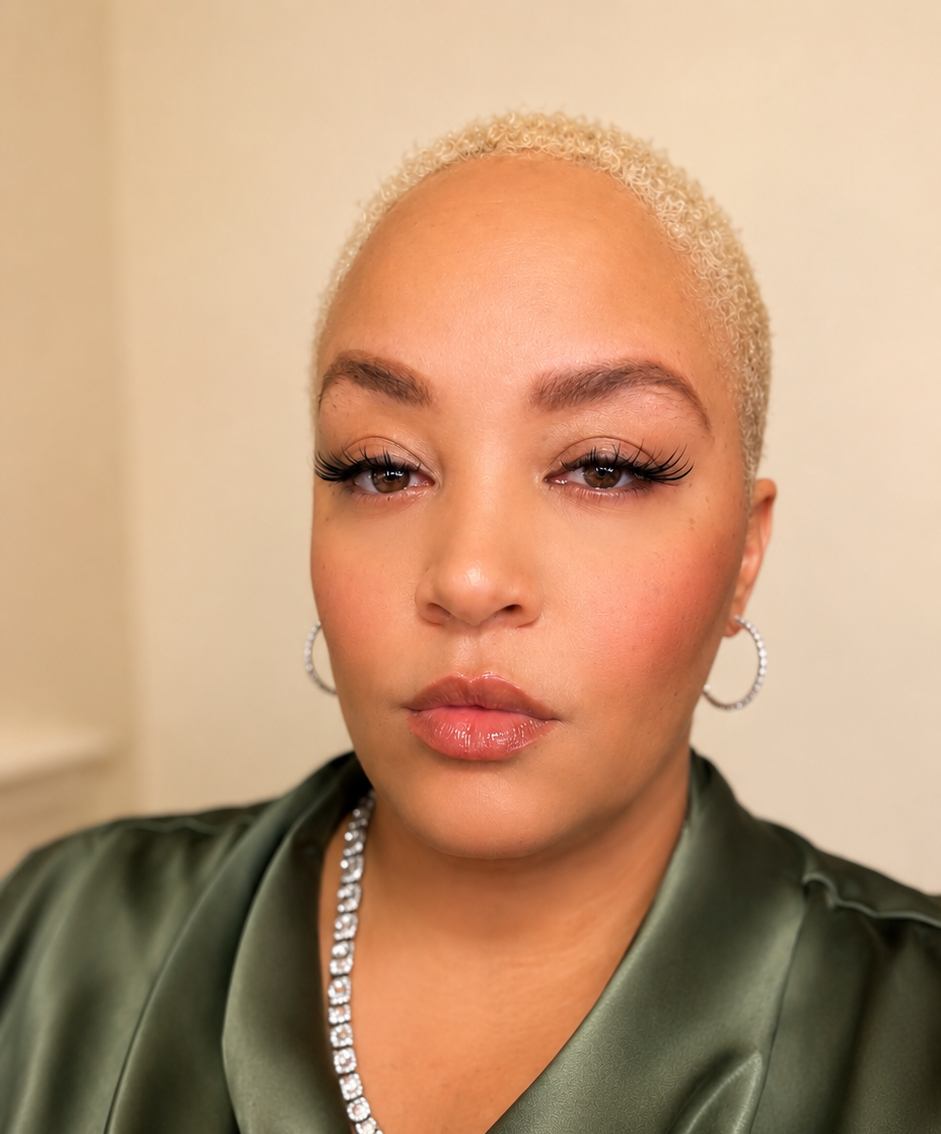
I am this woman.

I am the woman who walks into a room and people feel her before she speaks.

The posture.

The presence.

The authority.

The confidence.

The power.

The one who looks like she has everything handled.

The one people assume cannot be shaken.

The one people call strong, intimidating, independent, and hard to approach.

The one they call “alpha.”

But from the other side of the glass, I need to tell the truth.

That woman costs me something.

Every time I hold that space, it costs me something.

It costs me rest.

Because people assume I can keep going.

It costs me softness.

Because softness has not always been safe.

It costs me vulnerability.

Because I have watched my openness become ammunition.

It costs me love.

Because people admire my strength, but not everyone knows how to care for the woman underneath it.

It costs me the freedom to fall apart.

Because when you are the strong one, people do not always know what to do when you finally say, “I’m tired.”

And I am tired.

Not weak.

Not bitter.

Not broken beyond repair.

Just tired of having to be the rescue plan, the prayer warrior, the problem solver, the emotional regulator, the dependable one, the safe place, the backup plan, and the woman who still has to smile while carrying what would have crushed somebody else.

So when people debate whether alpha women exist, I want to ask a different question.

What did she survive that required her to become this powerful?

What did she lose while everyone was praising her strength?

What dreams did she delay?

What needs did she silence?

What version of herself did she bury just to keep standing?

Because maybe she is not trying to dominate anyone.

Maybe she is trying to make sure she is never abandoned without options again.

Maybe she is not hard.

Maybe she is protected.

Maybe she is not difficult.

Maybe she is disciplined because chaos raised her.

Maybe she is not intimidating.

Maybe people are uncomfortable with a woman who no longer apologizes for existing at full volume.

I personally know what it feels like to be respected and still not feel held.

To be admired and still not feel chosen.

To be needed and still not feel nurtured.

To be visible and still feel unseen.

That is the part people miss.

The alpha woman is often not asking to be worshipped.

She is asking to be understood.

She wants someone who can see the crown and still notice the headache.

Someone who can hear the confidence and still detect the tremble.

Someone who can honor her strength without making it the reason they neglect her softness.

Because behind the authority is a woman who still wants tenderness.

Behind the power is a woman who still wants peace.

Behind the independence is a woman who still wants safe partnership.

Behind the “I got it” is often a quiet prayer saying, “God, please send someone who gets me.”

So call her alpha if you want.

Call her strong.

Call her powerful.

Call her intimidating.

Call her too much.

But before you make her a debate topic, ask her what it cost to become the version of herself you now have an opinion about.

Because I promise you, the label is not the whole story.

Sometimes the woman you call alpha is just the woman who had to become her own rescue.

And sometimes, from the other side of the glass, she is not asking to lead the whole room.

She is asking for one safe place where she does not have to.

A.P. Brown


Purposely Stained


There is a quiet kind of terror that follows relationship trauma.

It is not the fear of being alone.


It is the fear of being wrong… again.

It is wondering if kindness is genuine or simply the opening chapter of another painful story. It is questioning whether consistency will remain once comfort sets in. It is learning to silence the voice that asks, “What am I missing?” every time someone treats you well.

Trauma has a way of making your heart become both a historian and a detective. It remembers every broken promise, every unexplained silence, every version of love that slowly became something unrecognizable. So when someone new arrives, your heart does not simply hope. It investigates.

People often mistake that for being guarded.

They do not realize you are carrying memories that your nervous system still mistakes for warnings.

The hardest part of learning someone new is not wondering whether they will love you. It is wondering whether the person standing before you today will still be standing there after your heart decides to believe them.

And yet…

There is something stronger than fear.

Hope.

Not the naïve hope that ignores red flags or rushes into attachment. The quiet, resilient hope that whispers, “Everyone is not who hurt you.” The hope that reminds you healing is not proven by the absence of fear, but by your willingness to keep your heart open anyway.

Faith does something remarkable.

It reminds you that your future is not being written by your past. That God is not asking you to relive what broke you. He is inviting you to trust that what He has for you will never require you to abandon yourself to receive it.

So yes, learning someone new is terrifying.

But my faith is louder than my fear.

My hope is heavier than my hesitation.

I no longer believe that every unfamiliar road ends in heartbreak. I believe there are still people whose character matches their words, whose consistency creates safety, and whose love does not require me to shrink, perform, or constantly prepare for disappointment.

So I will move slowly.

I will pay attention.

I will honor the wisdom my scars have given me.

But I refuse to let trauma have the final word.

Because fear may walk beside me…

But hope is leading the way.

A.P. Brown


Purposely Stained


By A.P. Brown | Founder of Purposely Stained


At Purposely Stained, I believe our deepest scars often become the places where purpose begins to bloom. From the Other Side of the Glass is a space where I write honestly about healing, identity, boundaries, grief, faith, and the quiet courage it takes to choose yourself after a lifetime of choosing everyone else. My hope is that somewhere in these words, you recognize pieces of your own story and discover that you are not alone.


There is a unique kind of exhaustion that comes from spending your life being everything to everyone else. It doesn't happen overnight. It happens one "yes" at a time. One favor. One sacrifice. One postponed dream. One more reason to wait. Before you realize it, you've become the dependable one, the strong one, the fixer, the caregiver, the encourager, the person everyone calls when life falls apart. Somewhere along the way, people begin to expect your availability more than they appreciate your humanity.

For years, I watched life happen through the glass. I celebrated promotions that weren't mine, attended weddings that weren't my own, held babies that belonged to someone else, applauded dreams that came true for people I loved, and quietly convinced myself that my time would come eventually. There was always someone who needed me more. A family member in crisis. A friend searching for direction. Someone needing my time, my resources, my wisdom, or my shoulders. I became so accustomed to serving others that I stopped asking myself what I wanted from my own life.

The hardest part about living this way isn't the serving. Serving is beautiful when it flows from love instead of obligation. The hardest part is forgetting where generosity ends and self-abandonment begins. I wore sacrifice like it was a badge of honor. I believed that saying yes made me a good daughter, a good friend, a good sister, and a good person. I never realized that every unnecessary yes was quietly becoming a no to myself.

Then something shifted.

I reached a place where I could no longer ignore the dreams I had placed on hold. The goals that had waited patiently for me. The woman I kept promising I would become "after everyone else was okay." I realized that while I had spent years helping others build their lives, I had been standing still, waiting for permission to build my own.

What surprised me wasn't how difficult it was to say no. It was the guilt that followed. Guilt has a way of whispering to people who have spent their lives serving others. It tells us that boundaries are selfish, that rest is laziness, that choosing ourselves is somehow an act of betrayal. It convinces us that we owe everyone access to us simply because we've always made ourselves available.

But I've begun to wonder who taught us that. Who decided that love should always require exhaustion? Who convinced us that our worth is measured by how much of ourselves we are willing to give away? Somewhere, many of us learned that being needed was the same as being loved. They are not the same thing. Being needed often depends on what you can provide. Being loved makes room for who you are, even when you have nothing left to give.

I've also learned something that isn't easy to admit. Some people will struggle when you begin choosing yourself, not because you've changed for the worse, but because your boundaries interrupt their expectations. The version of you they were comfortable with was always available, always accommodating, always willing to carry one more burden. Growth has a way of exposing relationships built on access rather than reciprocity.

So, if you've been feeling guilty for protecting your peace, for pursuing your education, for starting the business, for taking the trip, for resting, for declining the invitation, or simply for making yourself a priority, I want you to know that guilt is not always evidence that you're doing something wrong. Sometimes it's evidence that you're doing something unfamiliar. Sometimes it's the growing pain that comes with breaking patterns you've lived in for decades.

I've spent enough of my life watching everyone else walk toward their future while convincing myself mine could wait. It can't. None of us are promised another season. There comes a moment when choosing yourself is no longer selfish. It's stewardship. It's recognizing that your dreams deserve the same commitment you've so freely given to everyone else's.

From the other side of the glass, I can finally see that I was never meant to spend my entire life cheering from the sidelines of my own story. I wasn't born to be everyone's sacrifice. I was born with purpose, with dreams, with gifts that deserve room to breathe. Choosing myself doesn't mean I love others less. It simply means I have finally decided to love myself enough to stop waiting for my turn.

On This Side of the Glass

If you've spent years carrying everyone else, let today be the day you put something down without apologizing for it. Your life is not the reward you receive after everyone else's needs have been met. It is happening now. Don't spend another chapter watching through the glass when the door has been unlocked all along.

Thank you for reading.


I'm A.P. Brown, founder of Purposely Stained, where healing isn't about pretending you were never wounded. It's about discovering that what stained your life never disqualified your purpose. If this reflection resonated with you, I invite you to continue the journey through the From the Other Side of the Glass series and explore more stories about healing, identity, faith, and becoming.


bottom of page